Global Leadership Seminar Intensive Workshop 2026: Keio-University of California, Santa Barbara
- #Events
- #Multiculturalism
2026.10.01
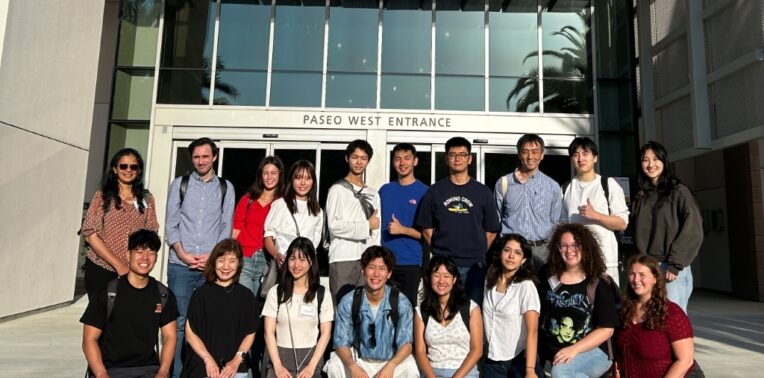
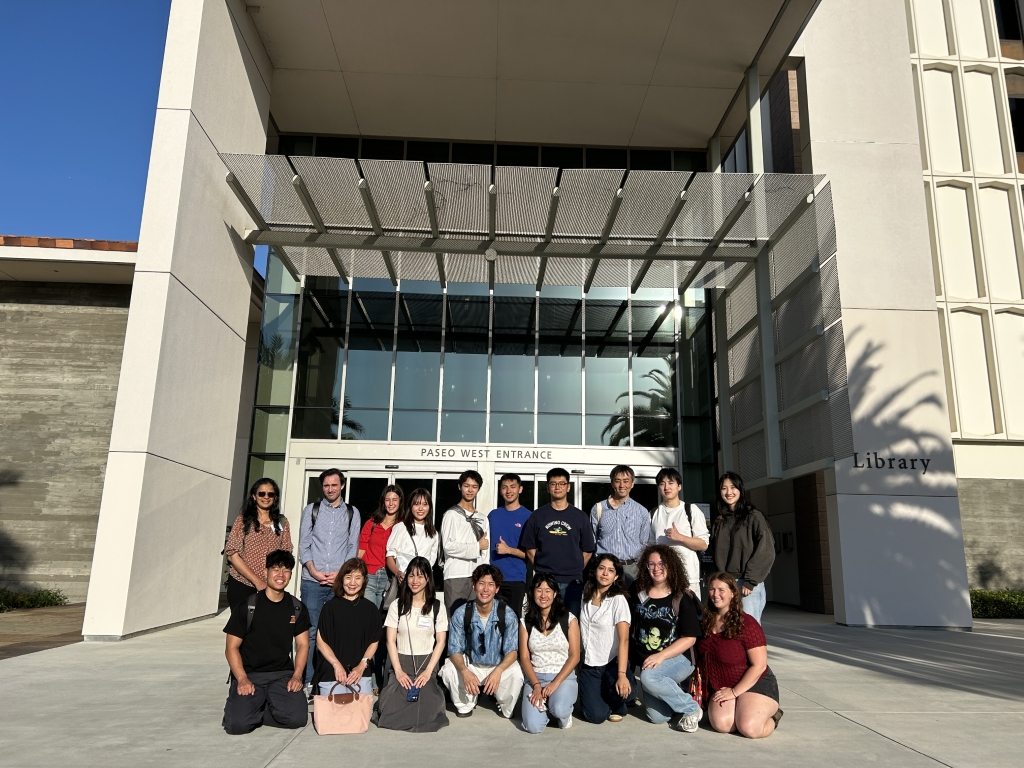
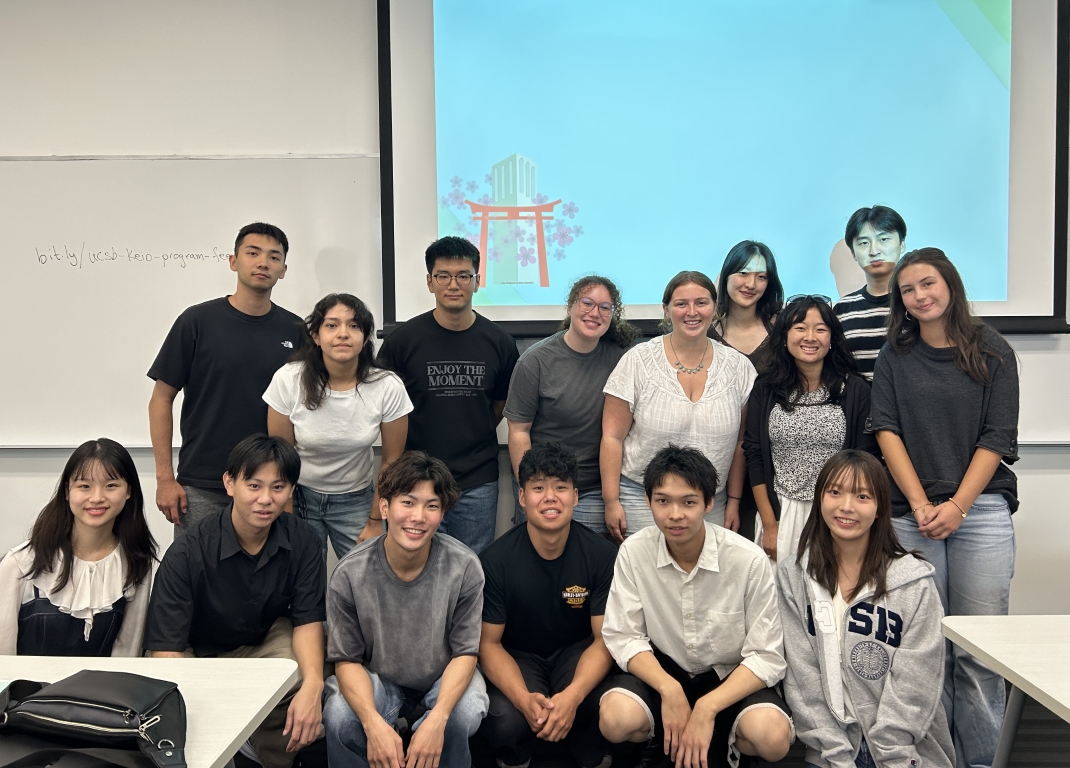
The Global Leadership Seminar Intensive Workshop was successfully held at the University of California, Santa Barbara (UCSB), from September 20 to 23, 2026. The program brought together eight students and three faculty members from Keio University’s Faculty of Science and Technology, along with seven students and one faculty member from UCSB. This initiative forms part of the Faculty’s liberal arts curriculum to cultivate the essential qualities of next-generation leaders in a global society in partnership with universities in several countries, including Taiwan and South Korea.
At the heart of the 2026 program were small-group projects, in which teams of three to four students explored contemporary societal issues, developed potential solutions, and presented and defended their proposals through oral presentations. Artificial intelligence (AI) featured prominently in the discussions, with projects examining its impact on education, the use and protection of personal data, the future of AI in a dystopian world, and the environmental challenges associated with its development and use.
Beyond the technical expertise typically acquired through STEM studies, students were encouraged to draw on critical thinking, creativity, and ingenuity to address the complex challenges posed by AI. The STEAM approach—integrating science, technology, engineering, arts, and mathematics—therefore served as a guiding educational framework throughout the program. In particular, the activities highlighted the importance of combining strong technical knowledge with broader skills such as communication, collaboration, creativity, and critical thinking. Students were thus able to experience firsthand how technical and interpersonal skills complement one another when tackling complex real-world problems.
These discussions were further enriched by the opportunity to engage with perspectives shaped by two distinct cultural environments: Japan and the United States. Working across these different backgrounds exposed students to diverse approaches to collaboration, alternative ways of framing complex issues, and different perspectives on potential solutions. By bringing together students with different cultural backgrounds and encouraging them to exchange ideas, listen to one another, and work toward common goals, the program also reflected the principles of Diversity, Equity, and Inclusion (DEI). This intercultural dimension was particularly appreciated by the students, whose enthusiasm for discovering another culture helped them overcome the initial hesitation of the first few hours and engage actively with one another.
Following the success of this year’s program, the Keio–UCSB Exchange Program is expected to continue in the 2027 academic year.
Contact regarding to this article
Benjamin Poignard
Department of Mathematics
Faculty of Science and Technology, Keio University